The layout dilemma holds up condo projects every week. Choosing between an open and closed condo kitchen dictates your entire timeline and budget. A homeowner wants a massive, airy island, but concrete ceilings and hidden plumbing get in the way. Here is the structural reality, the 2026 costs, and the process to get board approval without delays.
What “open” and “closed” actually mean
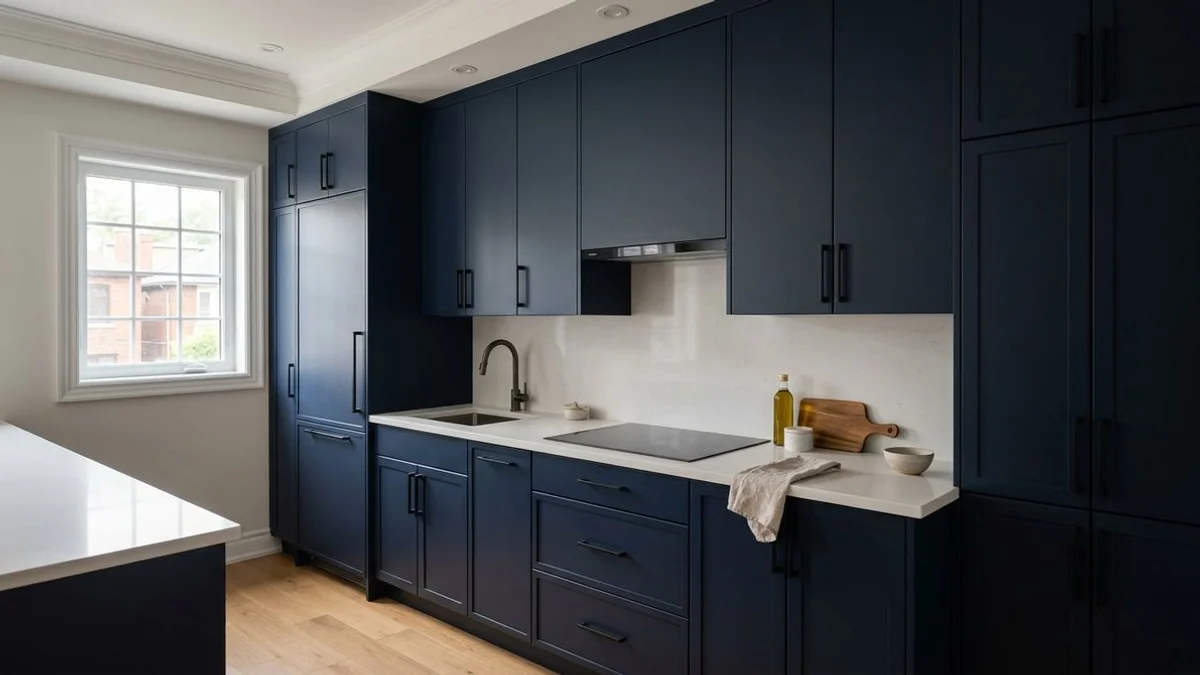
A closed condo kitchen is a separate room with at least three walls, a doorway, and often a service window. This layout is common in older buildings where unit sizes were larger.
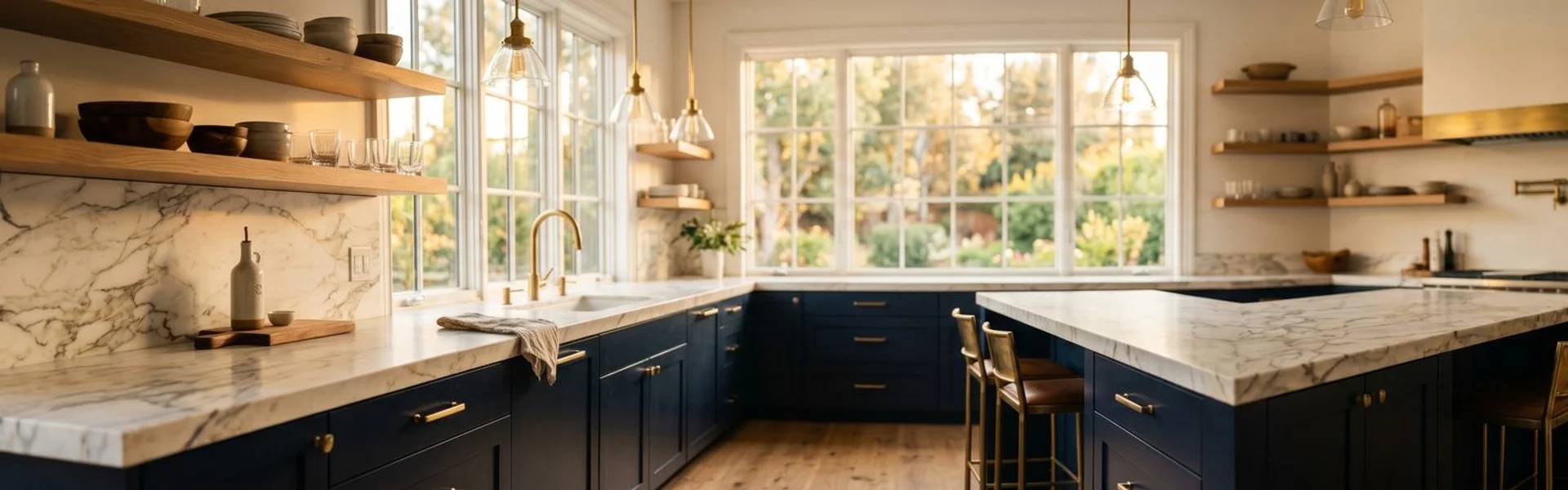
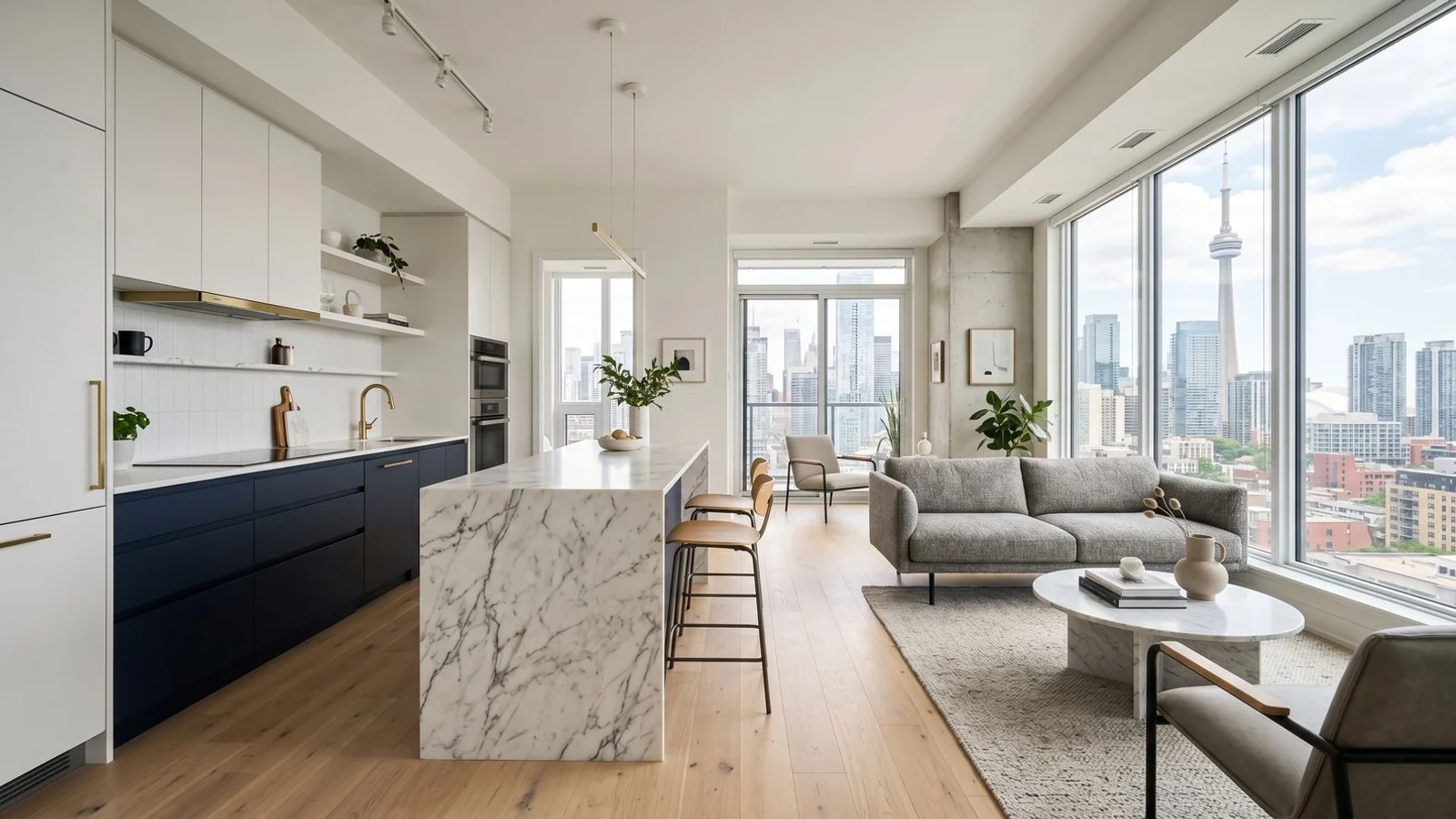
An open concept condo kitchen flows directly into the dining or living area without a full-height dividing wall, with a 6-to-8-foot peninsula or island as the boundary. The newer VMC towers were built with this as the standard as unit sizes shrank.
The primary request is tearing down a partition to go from closed to open. Building walls to enclose an open space is rare.
Open-concept benefits
- Maximum light flow: unobstructed layouts let daylight reach deep into the interior.
- Increased perceived size: a 600-square-foot condo with an open plan reads closer to 750.
- Enhanced social cooking: conversations continue across the prep zone, and a well-designed island becomes a gathering spot.
- Flexible furniture layouts: dining and living arrangements flow freely.
Modernising the layout can yield a return on investment between 75 and 150 percent at resale.
Open-concept constraints
Taking down a 10-foot dividing wall sacrifices roughly 15 linear feet of upper cabinetry storage.
- Pervasive cooking smells: many buildings restrict exterior ducting, leaving you reliant on recirculating hoods with premium charcoal filters.
- Appliance noise transfer: dishwasher sounds disrupt a living room movie night. Choose quiet models from Bosch or Miele.
- The visible mess factor: dirty dishes and prep clutter stay visible from the living area.
- Concealment costs: bins and bulky countertop appliances need custom cabinetry to stay hidden.
Structural considerations
Identifying Wall Types
Steel-stud partition walls in modern concrete high-rises are generally straightforward. Non-load-bearing walls can usually be removed, subject to board approval, and most kitchen-to-living dividers fall into this category. Load-bearing concrete columns and shear walls are strictly off-limits.
Handling Hidden Services
Walls housing building services need specialised evaluation. Fan coil unit piping, plumbing risers, and electrical conduits often run through dividers. We bring a structural engineer to verify these details at the consultation. An engineer’s report typically costs $500 to $1,500.
Bylaw considerations
Even when a wall is structurally removable, your condo corporation has the final say.
- Mandatory engineer drawings: boards require stamped plans before approving wall removal.
- Acoustic preservation: you must maintain the required STC and IIC ratings between units.
- Electrical safety checks: moving outlets to a new island requires Electrical Safety Authority permits.
- Ventilation verification: management confirms your range hood meets their ducting standards.
- Contractor vetting: the board verifies WSIB clearance and $2 million to $5 million in liability insurance.
When closed is the right choice
Keeping the room separated saves $10,000 to $15,000 on demolition, engineering, and structural work.
- Structural roadblocks: the wall is load-bearing or packed with building services.
- Board rejections: management denies wall removal.
- Intensive cooking habits: you regularly cook high-spice, high-grease meals needing strong exhaust.
- Maximum storage needs: a closed 10x10 layout gives up to 20 linear feet of wall for tall uppers.
- Multi-cook chaos: physical containment helps coordinate meal prep.
When open is the right choice
- Structural clearance: the wall is non-load-bearing and you have board approval.
- Compact square footage: the unit is under 700 square feet and a closed room feels dark.
- Frequent entertaining: you want a central island with bar seating.
- Low-impact cooking: your routine leans toward low-smell meals.
- Appliance upgrades: you will invest in quiet dishwashers and induction cooktops.
The middle path: half-open
Keeping a partial wall, half-wall, or widened doorway improves flow without a full teardown.
- Keeps plumbing intact: leaving the bottom 36 inches undisturbed preserves electrical and water lines.
- Speeds up approvals: bypassing full engineering reports saves three to four weeks.
- Adds functional seating: you gain a 42-inch elevated bar that hides the prep mess.
Cost implications
An open-concept transformation typically costs 25 to 35 percent more than updating a closed space in the same condo.
| Layout Strategy | Estimated 2026 Cost | Key Budget Drivers |
|---|---|---|
| Keeping Closed | $25,000 - $45,000 | Standard cabinetry replacement, new stone counters, cosmetic upgrades. |
| Half-Open (Partial) | $30,000 - $50,000 | Moderate demolition, a new bar counter, minor electrical adjustments. |
| Fully Open | $45,000 - $75,000+ | Full demolition, custom island millwork, structural engineer fees, extensive drywall patching. |
How to decide
Apply three filters in order:
- Is the wall non-load-bearing? If no, keep it closed.
- Will the board approve the removal? If no, keep it closed or pivot to half-open.
- Does an open space suit your cooking habits? If you cook heavy, aromatic meals daily, choose closed even with approval.
Pass all three with a yes, and removing the wall is usually the most rewarding investment you can make. Kitchen Renovations Vaughan handles the engineering and board paperwork for either path. Browse our condo kitchen renovation service, see the layout options for small condo kitchens, or book a free in-suite consultation.
Closed condo kitchen with full-height storage walls