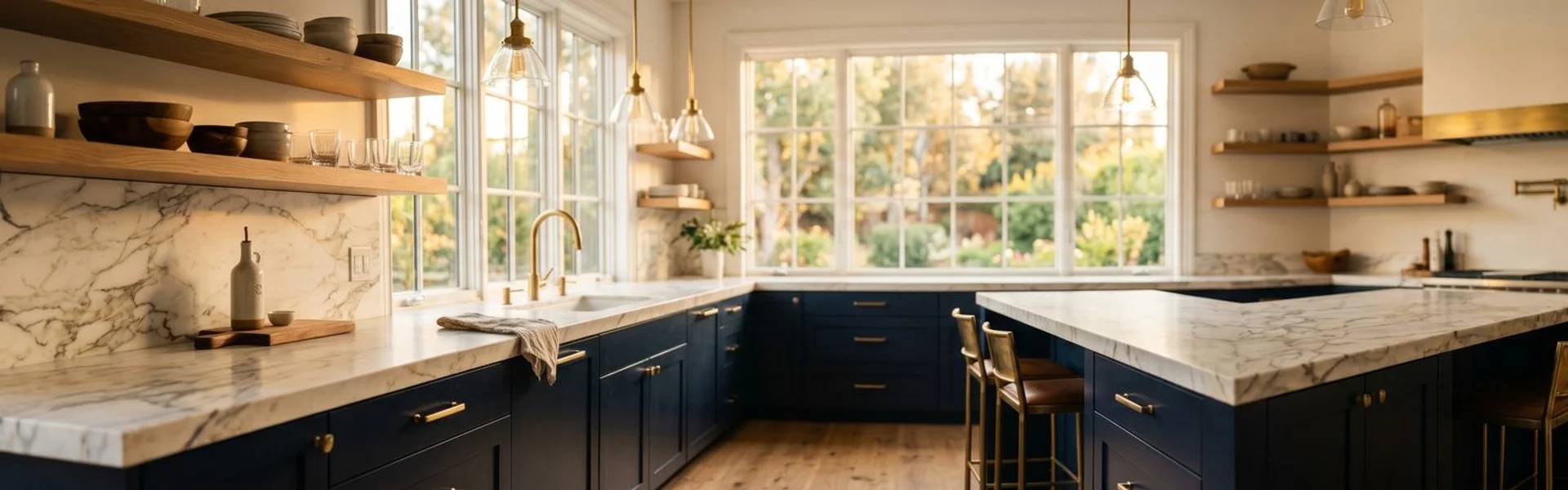
Material selection trips up a lot of homeowners during early design meetings. Choosing the best materials for kitchen cabinets is the difference between a space that lasts decades and one that fails in five years.
Cabinets consume up to 40 percent of a total renovation budget, so that investment is worth protecting from the start. Big-box sales staff often default to particleboard or melamine boxes because they cost less upfront, and those materials struggle in a climate like Vaughan’s. Here is what each material actually means for daily use, and the combinations that work.
MDF, the painted-finish workhorse
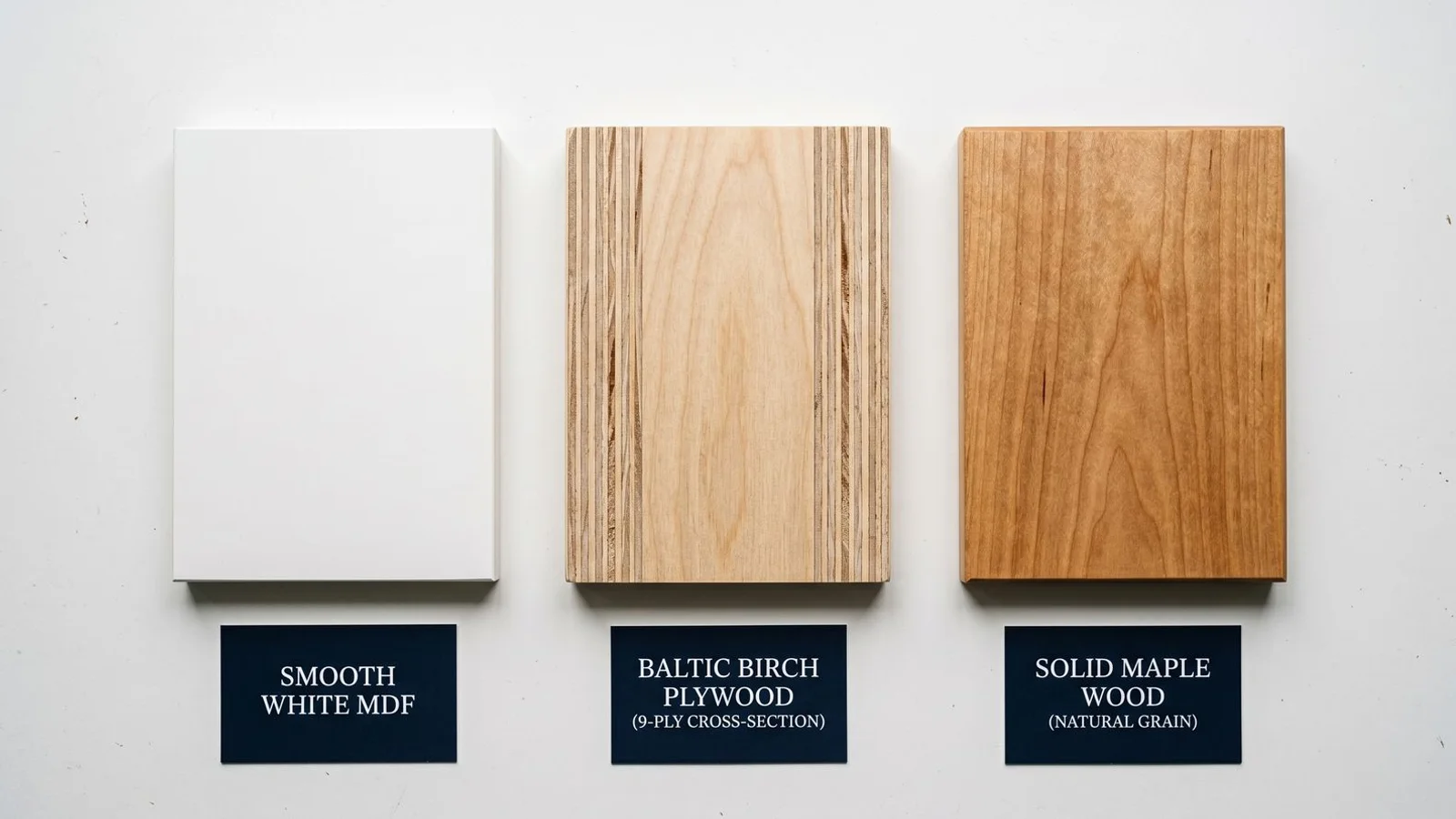
Standard MDF (medium-density fibreboard) is engineered wood made from compressed fibres. It has no grain, takes paint flawlessly, and machines cleanly into shaker, slab, or moulded door profiles.
We rely on MDF specifically for painted exterior finishes, because the smooth surface stops wood grain from telegraphing through the final coat. For kitchens that see heavy humidity, moisture-resistant MDF with a green core handles occasional spikes far better than a standard board.
- Pros: Delivers a perfect paint surface, remains dimensionally stable, machines cleanly, and costs less than solid wood.
- Cons: Heavy, weak near moisture, and swells permanently if water gets behind the finish.
- Best for: Painted door and drawer fronts, but never for cabinet boxes.
We pair MDF doors with plywood boxes for most painted kitchens. A stable material like MDF is what produces a crisp white finish without cracking joints over the seasons.
Plywood, the structural backbone
Cabinet-grade plywood uses multiple cross-laminated wood layers glued and pressed under high heat. It stays dimensionally stable across humidity cycles, anchors screws tightly, and resists moisture better than any engineered alternative.
We insist on plywood for the structural carcass of every vanity and kitchen island. It easily supports the weight of a 1.25-inch quartz countertop. We specify domestic plywood made with formaldehyde-free adhesives for good indoor air quality.
MDF vs. Plywood for Cabinet Boxes
The choice comes down to structural integrity versus surface finish. Here is how the two materials compare for cabinet construction.
| Feature | Plywood | Standard MDF | Moisture-Resistant (MR) MDF |
|---|---|---|---|
| Best Application | Cabinet boxes and shelves | Painted doors in dry zones | Painted doors in humid zones |
| Moisture Resistance | Excellent | Poor (swells permanently) | Moderate |
| Screw Holding Power | High (supports heavy stone) | Low (strips easily) | Medium |
| Paint Finish Quality | Fair (wood grain shows) | Flawless and smooth | Flawless and smooth |
- Pros: Exceptionally strong, stable, holds screws firmly, resists water, and lasts decades.
- Cons: Costs more than particleboard, requires edge banding for exposed sides, and takes paint less cleanly than MDF.
- Best for: Cabinet boxes, drawer boxes, and structural load-bearing elements.
Our standard is plywood for all cabinet boxes in every kitchen, with no exceptions.
Solid wood, premium doors and drawer fronts
Solid wood is what most people picture when they think of real cabinetry. Hardwoods like maple, white oak, walnut, and cherry are joined into door and drawer panels that can be sanded and refinished decades later.
We only source lumber kiln-dried to a strict 6 to 8 percent moisture content. Vaughan’s climate is punishing for natural wood: furnace heat drops winter humidity toward 20 percent, causing wood to shrink, while humid summers swell it back up.
- Pros: Offers a premium look, holds stain beautifully, allows for future refinishing, and maintains high resale value.
- Cons: Carries the highest cost, expands with humidity, and shows natural grain through paint.
- Best for: High-end kitchens, stained finishes, and long-term forever homes.
Our custom doors use rubber spacers, often called Space Balls, inside the frame. They compress in summer and expand in winter to keep floating centre panels centred and rattle-free.
Particleboard, why we avoid it
Particleboard, sometimes called chipboard, is loose wood particles bonded with cheap glue. It is inexpensive but lacks structural integrity for daily use.
Particleboard shelves sag under stacked dinnerware and fail rapidly when exposed to a plumbing leak or dishwasher steam. It is usually hidden behind a thin melamine veneer at big-box stores. Once water reaches the edges, the chips swell permanently and cannot be repaired.
- Pros: Offers the absolute lowest initial purchase price.
- Cons: Fails near moisture, strips screws easily, sags under stone counters, and is impossible to repair.
- Best for: Disposable rental properties, not a permanent residential upgrade.
We refuse to use particleboard in any project. Off-the-shelf cabinets built on it typically degrade after five to seven years and need full replacement.
Material recommendations by project type
Your budget and timeline dictate the best material combination. A strategic approach prevents over-improving a short-term condo or under-equipping a forever home.
Premium custom kitchen
- Plywood boxes for maximum structural integrity.
- Solid wood doors and drawer fronts with careful joinery.
- Stained or hand-painted finishes applied in a controlled booth.
- Premium hardware, like the Blum LEGRABOX system.
Mid-range Vaughan kitchen
- Plywood boxes to protect against moisture.
- MDF doors for a flawless painted finish, or solid wood for stains.
- Standard premium hardware with soft-close mechanisms.
Tight-budget refresh
- Plywood boxes are still required, so avoid particleboard completely.
- MDF doors with a durable factory paint finish.
- Standard hardware from reputable brands.
- Consider semi-custom fabrication to save on custom labour costs.
Sink-base specifics
- Always demand a plywood box for these wet zones.
- Add a moisture-resistant insert at the bottom.
- Avoid storing cleaning chemicals directly on the wood, as fumes degrade the clear coat.
Hardware doesn’t change with material
Hinges, drawer slides, and pulls are independent of your chosen box material, and high-quality hinges outlast the cabinetry by 20 years or more.
We install Blum or Hettich soft-close mechanisms regardless of budget tier. The Blum LEGRABOX 770 series is used for heavy-duty applications:
- Weight Capacity: the 770 series holds 125 pounds for heavy storage.
- Smooth Action: advanced runners stop wide, deep drawers from sagging.
- Silent Closing: BLUMOTION technology adjusts to the drawer’s closing speed.
York Region humidity considerations
Vaughan’s seasonal humidity swing destroys cheap cabinetry quickly. Indoor humidity drops near 20 percent in February and climbs past 60 percent during August heat.
”A rapid shift from 20 percent winter humidity to 60 percent summer humidity requires cabinet construction that prioritises dimensional stability above all else.”
Plywood boxes stay stable across that swing, which is why they are our baseline standard. We also recommend a whole-home humidifier on the furnace. Holding indoor humidity between 35 and 45 percent year-round protects cabinets, hardwood floors, and millwork from splitting.
What we use in our shop
Every cabinet built by Kitchen Renovations Vaughan relies on the same core materials. That consistency is what makes a 10-year warranty meaningful, whether we are building a $20,000 condo galley or an $80,000 estate kitchen.
- Plywood boxes: cabinet-grade, cross-laminated, fully edge-banded.
- MDF or solid wood doors: selected based on your desired finish.
- Plywood drawer boxes: dovetail joinery on premium projects, doweled on standard builds.
- Blum soft-close hardware: included as the minimum standard.
Choosing the best materials for kitchen cabinets is the foundation of a successful renovation. Explore our custom cabinet service for finish options, or book a free in-home consultation to scope your project.
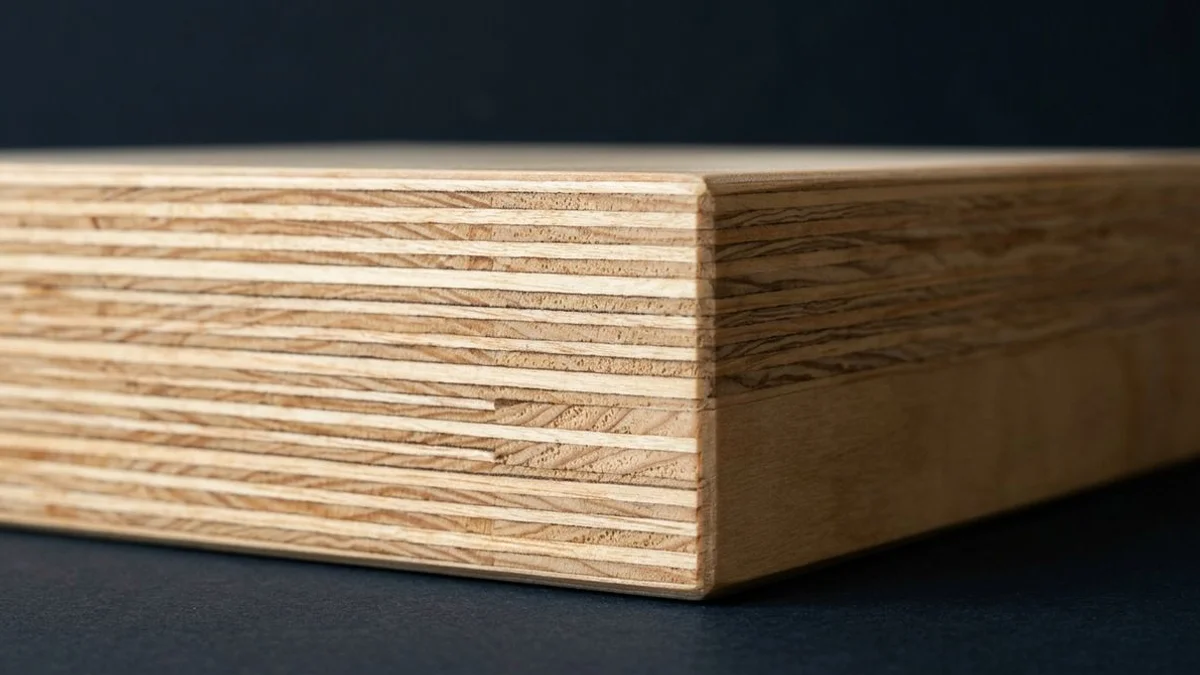
Cross-section detail of plywood cabinet box construction